
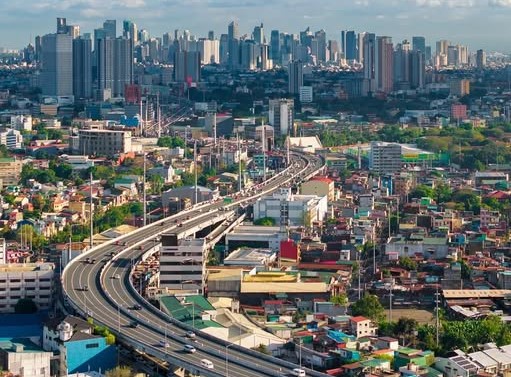
THE Philippines has now attained an upper-middle-income (UMIC) status, according to the World Bank.
In its latest income assessment released Wednesday, the World Bank said the Philippines has reached the gross national income (GNI) per capita of USD4,850, exceeding the USD4,636 threshold.
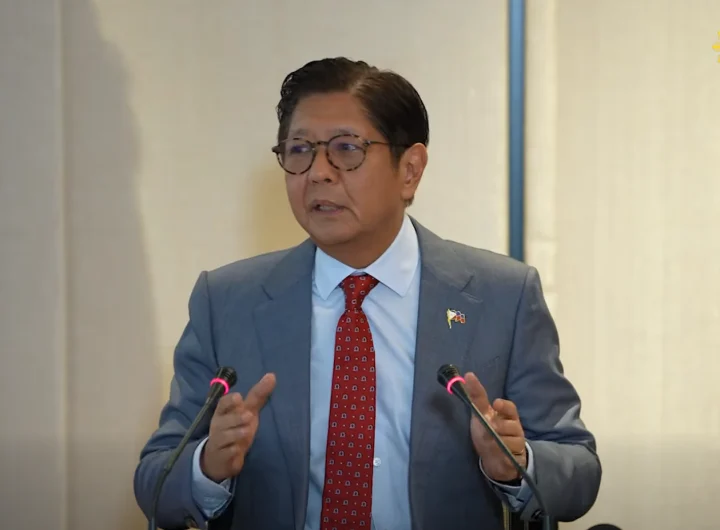
President Ferdinand R. Marcos Jr. on Thursday welcomed the Philippines’ official transition to upper-middle-income country status, noting that the milestone affirms the effectiveness of the government’s economic policies implemented over the four years.
“After nearly four decades as a lower-middle-income country since 1987, this milestone affirms that the economic policies we have pursued over the past four years have been effective,” President Marcos said in a video message.
“Our steady economic growth, broadly stable currency and long-term reforms have strengthened our economy even amid global uncertainties. It validates the progress we have made and the resilience of the Filipino people,” the President added.
The feat is also a vote of confidence in the country’s future, as greater confidence means more investment, which in turn leads to more businesses, better-quality jobs, and more opportunities for Filipinos.
Economic progress is not meant to stay on paper, the President said, noting that it means opening doors, putting food on the table, and giving every Filipino the chance to build a better life.
And amid the current achievement, the President vowed to continue working “until every family feels the benefits of our country’s progress.”
The Philippines joined Jordan, Micronesia, Sri Lanka, and Vietnam, which also moved from low-middle income to upper-middle income country status.
In a statement, the Department of Economy, Planning, and Development (DEPDev) said the country’s UMIC status was driven by sustained growth, sound macroeconomic management, and long-term structural reforms.
DEPDev expects the new classification to strengthen the country’s credit profile, boost investor confidence, and expand access to financing and higher-quality investments that generate better jobs for Filipinos.
He also acknowledged the contribution of overseas Filipino workers (OFWs), whose earnings abroad form part of the country’s GNI.
It noted, however, that the new classification does not diminish ongoing challenges, noting its priority is to ensure that growth becomes more inclusive and that it benefits all Filipinos.”
 JINGGOY SUSPENDED AGAIN FOR 90-DAYS OVER PLUNDER CASE
  HOUSE APPROVES P7.2-T 2027 BUDGET ON FINAL READING
  LACSON: PADILLA SHOULD CLARIFY ‘DISREGARD FOR LAW’ REMARK ON IMPEACHMENT TRIAL
  4 FILIPINOS HURT, INCLUDING 3 IN ICU, IN RIYADH AIRPORT ATTACK
  PRESIDENT MARCOS ASSURES PUBLIC OF SUFFICIENT FOOD SUPPLY AMID STRONG EL NIÑO THREAT
  EVERY COMMUNITY HAS A STORY CONGRESS NEEDS TO HEAR – SPEAKER DY
  SM CITY CALAMBA 3-DAY SALE