
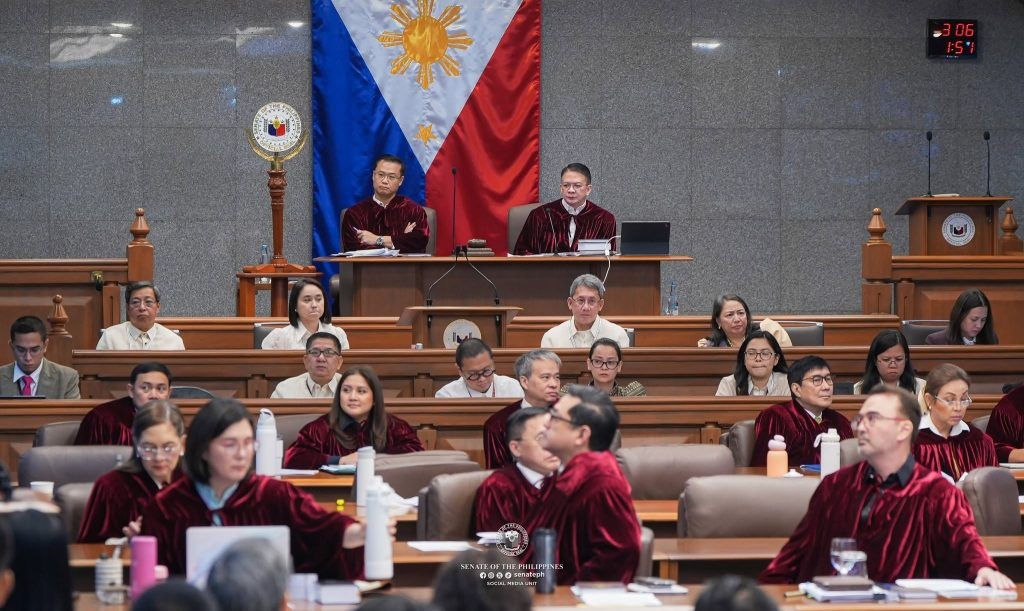
THE House prosecution panel said it scored a major legal victory on Monday after the Senate impeachment court granted most of its requests to subpoena the financial and tax records of Vice President Sara Z. Duterte in connection with the unexplained wealth allegations under Article II of the Articles of Impeachment.
Reading the ruling, Presiding Officer Sen. Francis “Chiz” Escudero said the requested records are “reasonably described, readily identifiable, prima facie relevant, and material” to the allegations against Duterte.
The impeachment court rejected the defense’s claim that the requests amounted to a fishing expedition.
“The subpoenas requested by the prosecution satisfy both requirements of relevance and definiteness,” the ruling stated.
The court granted subpoenas covering Duterte’s peso-denominated bank accounts, the separate and joint accounts of her husband, attorney Manases “Mans” Carpio, records of Duterte, Carpio, Carpio Lawyers and 19 corporations linked to them, as well as relevant records from the Anti-Money Laundering Council (AMLC).
It also ordered the issuance of subpoenas for the tax records of the law firm and the corporations, subject to the requirements of the National Internal Revenue Code.
The court, however, denied the prosecution’s requests involving JTC Group of Companies and Pikimong Pikimong Philippines Corporation.
It said the prosecution failed to establish a prima facie showing that either Duterte or Carpio had sufficient links to the two entities to justify piercing their separate corporate personalities.
The impeachment court likewise excluded foreign currency deposits from the subpoenas, citing Republic Act No. 6426 and the Supreme Court’s ruling during the impeachment trial of former Chief Justice Renato Corona.
The court also allowed the production of records dating back to 2007, but said they may be used only to establish a financial baseline rather than to prove new or separate impeachable offenses.
“The records are not being sought to prove new impeachable offenses, but only to establish a financial baseline against which the respondent’s wealth during her incumbency may be measured,” the ruling stated.
The court also overruled the defense’s objection to subpoena Carpio’s bank records after the defense confirmed to Escudero that Duterte and Carpio had no prenuptial agreement and were therefore covered by the default regime of absolute community of property.
It ruled that examining Carpio’s financial records is necessary to determine Duterte’s true net worth.
“Because Philippine civil law legally merges their assets, properties, and income into a single absolute community, it is a legal and mathematical impossibility to determine the respondent’s true net worth or lawful income without examining the bank accounts of her husband,” the ruling said.
The impeachment court also rejected the defense’s reliance on the Data Privacy Act. It said the law itself recognizes compliance with a lawful subpoena and does not bar the production of the requested records.
The court also ruled that AMLC confidentiality provisions cannot override the Senate impeachment court’s constitutional subpoena power.
It ordered the production of suspicious transaction reports and covered transaction reports that are prima facie relevant to the alleged unexplained wealth.
“The admissibility and evidentiary weight of documents in an impeachment trial are determined by the Constitution, the Rules of Court, and the judgment of the impeachment court—not by unilateral disclaimers printed by an executive agency on its letterhead,” the ruling stated.
To protect confidential information, the court directed AMLC to first submit the records for in camera review before any disclosure to the parties.
The impeachment court also ruled that Carpio Lawyers cannot invoke a blanket claim of attorney-client privilege to avoid complying with the subpoena.
“No generalized blanket invocation of attorney-client privilege shall excuse compliance at this time,” the ruling stated.
It said any claim of privilege must instead be raised over specific documents during the proceedings.
On the BIR records, the court clarified that issuing a subpoena does not automatically authorize the disclosure or admission of tax records into evidence.
“The issuance of a subpoena is not equivalent to automatic disclosure or admissibility,” the ruling stated.
Instead, the court directed BIR Commissioner Charlito Martin Mendoza to make the appropriate return under the National Internal Revenue Code before any further action is taken.
The banks, AMLC and the BIR Commissioner were ordered to submit the required records, or make the appropriate return, before the Clerk of Court on July 30.
 RAFFY TULFO EXPRESSES ALARM OVER WIDESPREAD ONLINE SALE OF FAKE PWD ID’S
 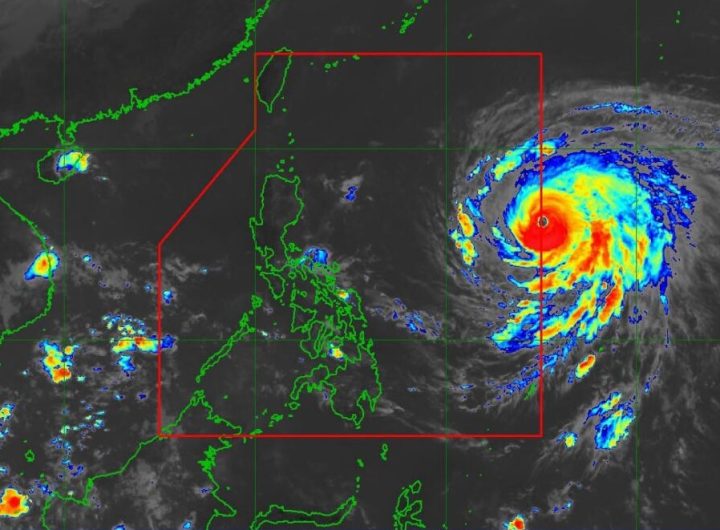 PALACE ASSURES GOV’T READINESS FOR SUPER TYPHOON ROSAL
 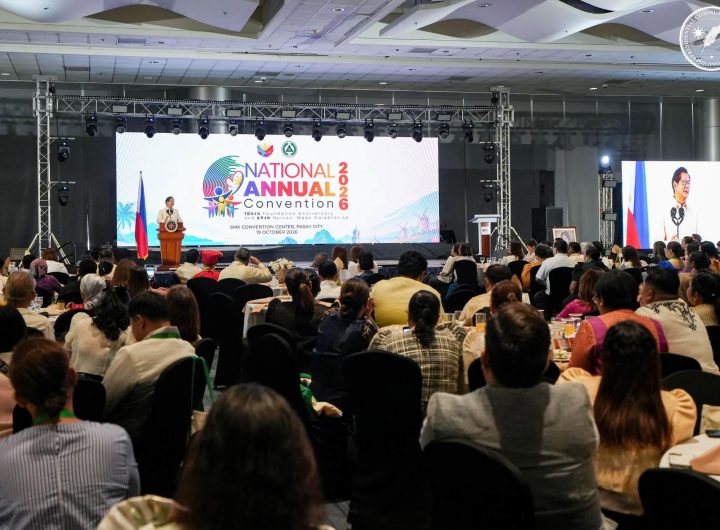 PRESIDENT MARCOS VOWS BETTER WORKING CONDITIONS, MORE OPPORTUNITIES FOR FILIPINO NURSES
  ‘TAKE DOUBLE PRECAUTION,’ ERWIN TULFO TELLS OFWS AMID CHAOS IN FRANCE, SAUDI, ISRAEL
  DROP IN SORSOGON POVERTY RATE CREDITED TO CHIZ-ERA REFORMS
  11 TAGGED IN 521 KILOS OF PH-BOUND SHABU SEIZED IN LAOS
  DRIVER-CUM-DRUG PEDDLER, COHORT BUSTED
  COPS SMASH MABALACAT CITY DRUG DEN