

AROUND 31,600 learners in Grades 1 to 3 in the province of Cebu were not yet reading at grade level. The Second Congressional Commission on Education (EDCOM 2) revealed.
EDCOM 2 presented data on early-grade reading and early childhood development in Cebu at the Ramon Aboitiz Foundation’s ECCD Convergence 2026, held in Cebu on October 1, 2026.
In his presentation, EDCOM 2 Executive Director Dr. Karol Mark R. Yee reported that at the end of School Year 2025 2026, around 31,600 learners in Grades 1 to 3 in the Province of Cebu were struggling with reading.
Based on the Department of Education’s Comprehensive Rapid Literacy Assessment (CRLA), SDO Cebu has the third-highest number of struggling readers among all school divisions in the country, with 11 percent — equivalent to 13,300 students in Key Stage 1 — classified as struggling readers.
Cebu province faces one of the largest early-grade reading challenges nationwide.
Notably, the local government units (LGUs) of Talisay, Balamban, Liloan, Consolacion, and Madridejos among others, have the largest concentration of struggling readers, highlighting the need for focused attention and contextualized intervention.
Dr. Yee further noted that if these challenges in literacy are not addressed early on before they move to Grade 4, data shows that gaps widensubstantially in later grades, with many students in Junior and Senior High School unable to read and comprehend for their grade level, as reported in the EDCOM Final Report, Turning Point: A Decade of Necessary Reform.
The presentation linked reading outcomes to conditions before a child enters school. About 25,000 children under five in Cebu Province are stunted, based on the National Nutrition Council’s 2025 Operation Timbang Plus report. Research cited by the Commission shows that stunted children are 16 percent more likely to fail a grade, and that cognitive damage from stunting after 24 months of age cannot be reversed.
Under the National Education Plan 2026–2035, EDCOM 2 has set a target of raising the share of Key Stage 1 learners reading at grade level from 47.74 percent (EOSY 2024–2025) to 75 percent by 2028, 90 percent by 2031, and 95 percent by 2035.
“If these are our national targets, what targets will Cebu as a province set in terms of reducing stunting, improving access to early childhood education, and also addressing illiteracy at Grade 3? Is it improving by 5 or 10 percent? Whichever the number is, it is important to quantify so that we know how much effort and resources we all need to bring together, to ensure that no Cebuano child is left behind,” said Dr. Yee.
“With the many universities here in Cebu, the active engagement of civil society organizations such as RAFI, and the determination of the loczl government, I am sure that Cebu can make significant progress in education and nutrition in the years ahead.”, he continued.
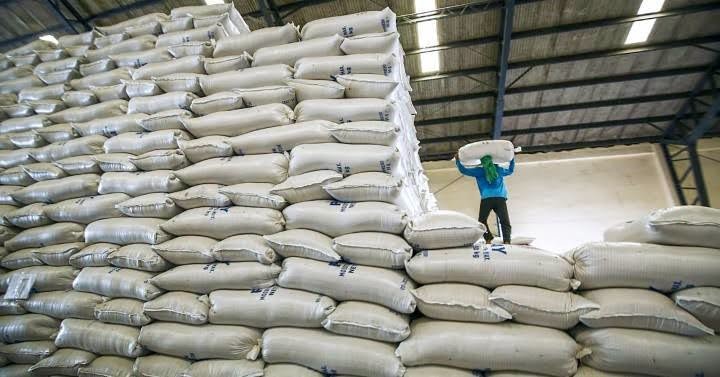 NFA DIRECTED TO BUY MORE PALAY, BUILD RICE STOCKS AHEAD OF EL NiÑO
 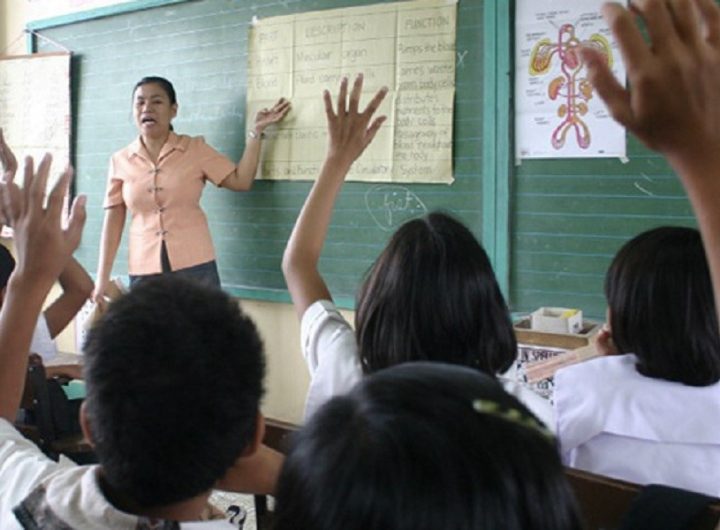 PRESIDENT MARCOS VOWS MORE BENEFITS FOR TEACHERS
  PBBM OPENS UP ABOUT LIFE BEYOND PRESIDENCY, HIS LOVE FOR MUSIC
  CAISS WILL KEEP TRAVELER DATA INSIDE PH, SECURIPORT ASSURES
 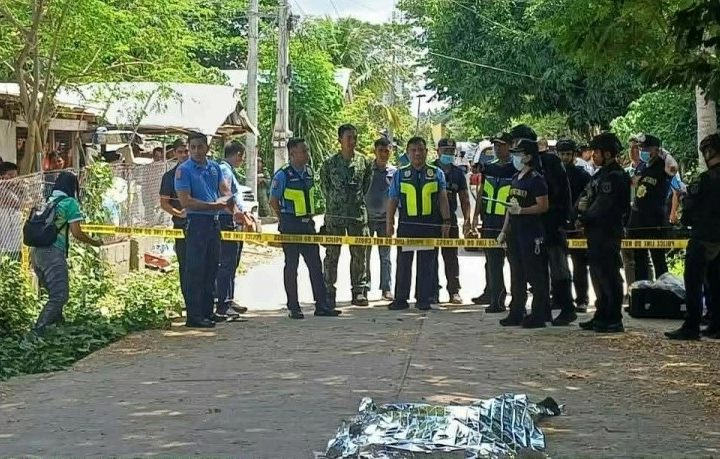 BLAST KILLS 3 KIDS, SENIOR IN ISABELA
  USE LONGER TERM TO FOCUS ON COMMUNITIES, PUBLIC SAFETY – SPEAKER DY TO BARANGAY OFFICIALS
 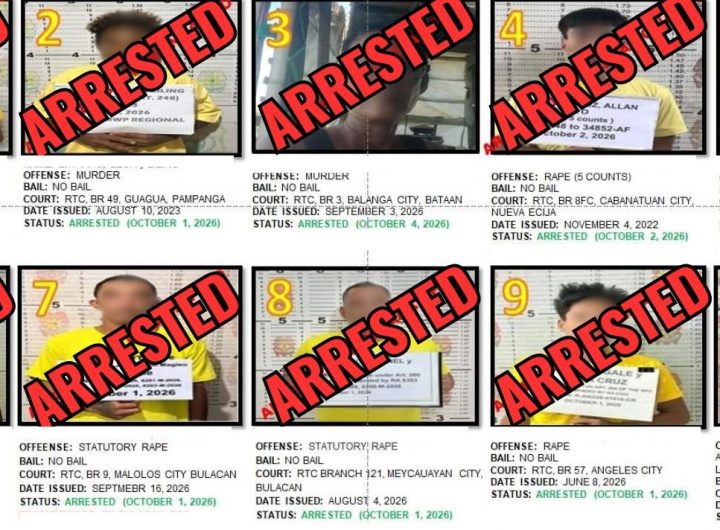 4-DAY OPERATIONS NET ALL OCTOBER TOP 10 FUGITIVES IN CENTRAL LUZON