

THE proposed Civil Aviation and Immigration Security Services (CAISS) will be anchored on strict data-sovereignty safeguards, with all traveler information kept inside the country and used only for lawful government purposes, Securiport chief technology officer Nate Carpenter assured.
Carpenter, in a recent online interview with reporters on the sidelines of the 21st International Civil Aviation Organization (ICAO) Traveler Identification Program (TRIP) Symposium in Montreal, Canada, said data localization is non-negotiable for any national security system.
“The data for any national security system needs to stay in the country. It is very important that any deployed system keeps its data in the Philippines. That the data is protected by the authorities according to all of the regulations and laws that are there, you do not want your data leaving the country,” he said.
CAISS, he added, is designed so that information collected from travelers is not transmitted to foreign jurisdictions or private parties.
“The data is used by the government only for their lawful purpose, and that data is not sent anywhere else. Keeping the data in the Philippines, in the government’s data centers, is critical to this whole process,” Carpenter said.
He described the unsolicited P10.74-billion CAISS as a comprehensive enhancement to the country’s border security ecosystem.
Carpenter also cited the global push for a Digital Travel Credential (DTC) standard, which allows countries and technology providers to interoperate while ensuring governments know what data is being collected and how it is processed.
“The good part is that global governments have agreed to a standard for this kind of data collection. It is called a digital travel credential, or DTC,” he said, adding that the standard helps ensure “the government knows what’s being collected and how to process it.”
Carpenter spoke from the September 22 to 24 annual event, which brought together representatives from passport and civil-registry offices, border control and law enforcement, aviation security and public health, airlines and airports, international organizations, and industry from around the world to explore ways to make travel safer, more secure, and more seamless.
Under the theme “Putting Trust into Practice: Towards Trusted Travel Identity for All,” discussions centered on traveler identification, border security, privacy safeguards, and system interoperability. Participants also highlighted the importance of aligning these efforts with ICAO standards to deliver smoother and more secure journeys.
With data staying in Philippine government data centers and protected under local laws, CAISS is being positioned as a secure, sovereignty-respecting upgrade to the country’s border control architecture—one that strengthens national security without compromising traveler privacy.
A Public-Partner Partnership (PPP) project of US-based Securiport LLC currently under review by the Department of Finance, Office of the Solicitor General, and PPP Center,
CAISS seeks to integrate Passenger Name Record (PNR) data with Advance Passenger Information, which would allow authorities to cross-reference travel patterns, social media activity, and previous records.
Compliant with ICAO, a United Nations specialized agency that sets biometric and border security standards for air navigation, CAISS includes automated border control with contactless face pass, biometric kiosks, criminal record search engines, and deception detection tools.
It will not replace or duplicate existing systems, but enhance by multiplying them, Carpenter added.
 NFA DIRECTED TO BUY MORE PALAY, BUILD RICE STOCKS AHEAD OF EL NiÑO
  PRESIDENT MARCOS VOWS MORE BENEFITS FOR TEACHERS
  PBBM OPENS UP ABOUT LIFE BEYOND PRESIDENCY, HIS LOVE FOR MUSIC
  OVER 31,000 EARLY-GRADE LEARNERS IN CEBU STRUGGLING WITH READING – EDCOM 2
  USE LONGER TERM TO FOCUS ON COMMUNITIES, PUBLIC SAFETY – SPEAKER DY TO BARANGAY OFFICIALS
 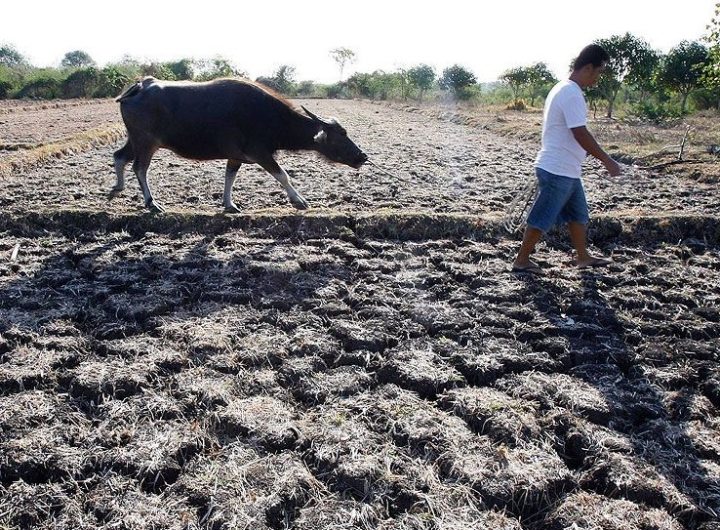 DA RAMPS UP PREPARATIONS FOR SUPER STRONG EL NIÑO
  4-DAY OPERATIONS NET ALL OCTOBER TOP 10 FUGITIVES IN CENTRAL LUZON