

LAWMAKERS had long warned that the Philippines’ aging border security infrastructure was ill-equipped to combat human trafficking, terrorism, and transnational crime.
The warnings have been amplified by the recent repatriation of 11 Filipino workers from Malaysia in mid-June and the arrest of 10 foreign nationals in Siargao on June 26.
On June 16, 11 Filipinos were repatriated from Kota Kinabalu, Malaysia, after leaving the country through illegal “backdoor” routes to seek overseas work. Six of the repatriates had bypassed legal procedures before working in construction, mechanical, and maritime jobs, with most reporting they received no salary during their employment abroad.
Most, according to the Bureau of Immigration (BI), did not receive any salary during their employment abroad.
Immigration Commissioner Joel Anthony Viado said the case highlights the risks faced by Filipinos who leave the country through backdoor routes in search of overseas employment.
Immigration Commissioner Joel Anthony Viado said the case underscores the risks faced by Filipinos who circumvent legal departure procedures by leaving the country through backdoor routes to seek overseas employment.
He reportedly said unscrupulous recruiters continue to prey on Filipinos by promising jobs abroad while encouraging them to bypass legal departure processes.
Just days later, on June 26, BI agents arrested 10 foreign nationals in General Luna, Surigao del Norte, including four Israelis, two Chinese nationals, a Lithuanian, an Australian, a Moroccan, and a Nigerian, for violating immigration laws, including overstaying and engaging in gainful activities without permits.
OUTDATED SYSTEM
These incidents have given fresh urgency to legislative efforts to modernize border security, which remains anchored in the Philippine Immigration Act of 1940 — an 85-year-old law that lawmakers say is no longer fit for purpose.
Senator Francis “Kiko” Pangilinan, who has filed Senate Bill No. 1867 to strengthen and modernize the BI, earlier stressed that a pre-war framework cannot address contemporary challenges.
“Hindi na sapat ang isang pre-war na balangkas para sa mga hamon ng makabagong panahon” (A pre-war framework is no longer sufficient for the challenges of the modern era),” Pangilinan was quoted as saying.
Rep. Ferdinand Martin Romualdez championed the passage of the BI Modernization Bill, highlighting its dual benefits for travelers and national security.
“This bill’s importance cannot be overstated… It is two-pronged in that it will improve travel experience and at the same time tighten up our border security,” Romualdez said in an earlier statement.
Senator Raffy Tulfo has focused on data integrity and maritime vulnerabilities, urging agencies to close security gaps.
“Public service, including our work here in the legislative, starts with data,” Tulfo earlier said, raising specific concerns about gaps in data cross-matching and vulnerabilities in seaports and maritime borders, which he said are less regulated than airports.
Tulfo previously warned that foreign nationals could be illegally entering the Philippines via dredging vessels, which could also be exploited for smuggling.
TRANSLATING GAPS INTO COMPREHENSIVE, END-TO-END SECURITY SOLUTION
To translate these legislative priorities into action, the BI is reviewing the Civil Aviation and Immigration Security Services (CAISS) project, a P10.74-billion public-private partnership proposal currently undergoing interagency review. The project would cover all 11 functioning international airports.
BI spokesperson Dana Sandoval earlier described the proposal as a comprehensive, end-to-end security solution.
“From frontline operations to data processing, data collection, and data assessment, the entire system is integrated,” Sandoval said, adding that the project would deploy biometrics, electronic gates, and real-time AI-driven data sorting to flag human traffickers, terrorists, and other high-risk travelers before they enter or leave the country. Features include advanced passenger information systems, automated border control with contactless facial recognition, biometric kiosks, and deception detection tools.
The proposal has already undergone a Swiss challenge, with no competing offers submitted. It adopts a user-pays financing model, with travelers potentially paying a $4 (approximately P240) fee per entry or departure — effectively financing the system without direct cost to the government.
Sandoval noted that the project includes a mandatory four-year technology refresh cycle, ensuring the BI uses current technology at no additional expense to taxpayers.
Charging user fees applies the embedded core of the “user-pay principle,” whereby end-user payments enable private concessionaires to recover investments in transport, water, and healthcare, among others, so that only users bear infrastructure costs, while non-users are spared.
Under Section 13 (Issuance of Franchise and Regulation of Tolls, Fares, Fees, Rentals, and Other Charges) of Republic Act No. 11966, also known as the Public-Private Partnership (PPP) Code of the Philippines, the authority to fix, adjust, and regulate user fees is established.
The provision explicitly states: “The implementation and collection of tolls, fares, fees, rentals, and other charges for the use of the project facility shall be in accordance with the schedules stipulated in the PPP contract: Provided, That the initial tolls, fares, fees, rentals, and other charges, and any subsequent adjustments thereof, shall be subject to the approval of, or regulation by, the appropriate Regulatory Body or the Implementing Agency, as the case may be, in accordance with the parameters set in the PPP contract.”
Viado said the BI recognizes the importance of modernizing border management infrastructure to better combat transnational crimes, human trafficking, terrorism, and other emerging security threats.
With human trafficking, illegal entry, and transnational crime persisting, lawmakers and immigration officials agree that the Philippines can no longer rely on an 85-year-old framework to secure its borders.
As Viado emphasized, unauthorized departures and entries remain a serious national security and human trafficking concern.
 JINGGOY SUSPENDED AGAIN FOR 90-DAYS OVER PLUNDER CASE
  HOUSE APPROVES P7.2-T 2027 BUDGET ON FINAL READING
  LACSON: PADILLA SHOULD CLARIFY ‘DISREGARD FOR LAW’ REMARK ON IMPEACHMENT TRIAL
 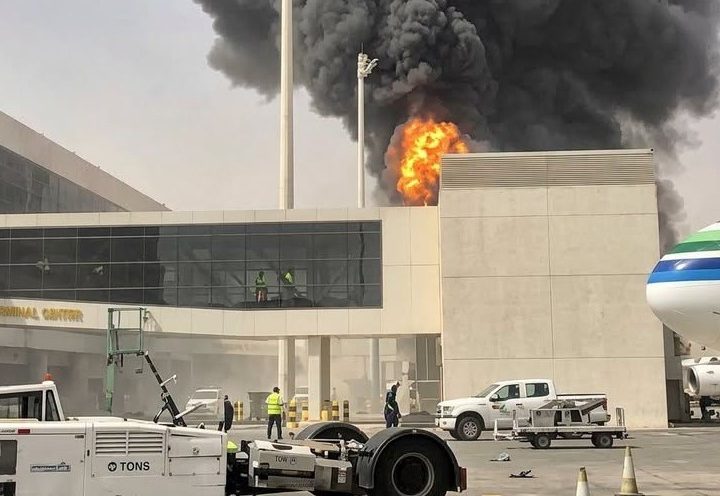 4 FILIPINOS HURT, INCLUDING 3 IN ICU, IN RIYADH AIRPORT ATTACK
  PRESIDENT MARCOS ASSURES PUBLIC OF SUFFICIENT FOOD SUPPLY AMID STRONG EL NIÑO THREAT
  EVERY COMMUNITY HAS A STORY CONGRESS NEEDS TO HEAR – SPEAKER DY
  SM CITY CALAMBA 3-DAY SALE